
Classification of the Czechoslovakian classic and project start
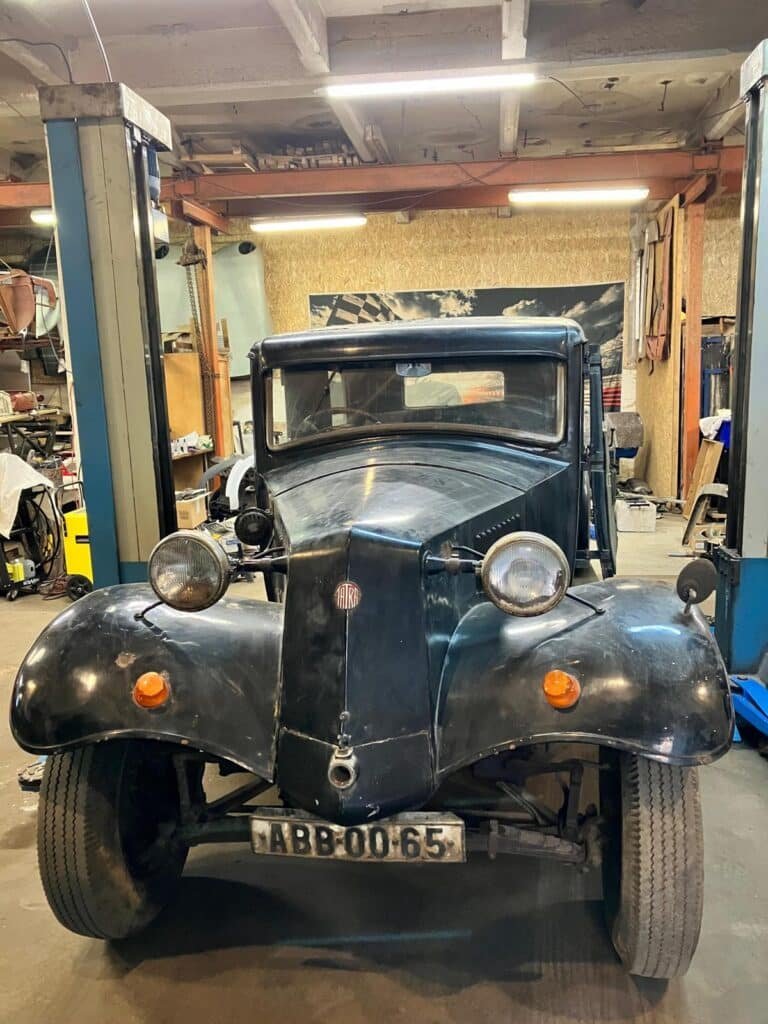
We have been working on this Tatra 603-2 since 2016. Initially, the vehicle was purchased by an employee for personal use. In 2023, it changed hands. The necessary work was subsequently carried out in our workshops in the Czech Republic.
The condition of the unibody construction necessitated a comprehensive sheet metal rebuild, as the car had been standing unprotected for many years. Our defined scope of work for this project focused exclusively on the bare body shell and the repair of the extensive corrosion damage. Other aspects, such as mechanical work, interior finishing, painting, and final assembly, were deliberately postponed for the time being.
Especially with a Tatra 603-2, it's crucial to have a clear understanding of the project's endpoint before even beginning. While the large, streamlined sedan appears uncluttered and composed from the outside, significant damage can be hidden beneath layers of paint, sealant, and old repairs. Therefore, for this Tatra restoration, the priority wasn't a rapid overall build, but rather establishing a robust body structure first.


Technical features of the large touring sedan
The Tatra 603 was built after 1945 for state and ceremonial use in Czechoslovakia. Its design differs significantly from normal passenger cars, as it features an air-cooled V8 rear engine, which necessitates a special cooling air routing system in the rear.
This design is important for workshop work because the air ducts, engine compartment structure, and large, rounded sheet metal surfaces interlock directly. Many vehicles have been modernized over the decades through everyday use or have had parts from other model years mixed together. Therefore, before work begins, a thorough inspection of the existing assemblies is necessary to determine the actual configuration and which parts match the original condition.
Correct alignment determines whether windows, trim strips, bumpers, lights, and attachments can be mounted without tension after painting. This is particularly important for a classic Tatra of this design because the body shape, cooling air routing, and rear-engine concept are technically interconnected.
Bodywork and rust removal based on findings
The vehicle's sheet metal exhibited significant defects. In our workshops in the Czech Republic, after complete disassembly, the classic weak points were first exposed. The floor assembly, inner and outer sills, and wheel arches were extensively affected by rust and, in some cases, had to be completely reconstructed.
The complex lower door edges, the front grille, and the surrounding window frames also required a complete rebuild in sheet metal. The large surfaces of the Tatra 603 demand precise alignment and meticulous craftsmanship in bodywork construction to ensure correct transitions and gaps between the heavy hoods and doors during subsequent assembly.
After the actual rust removal, the sheet metal was rebuilt, the seams were precisely sealed, and thorough cavity protection was applied to protect the exposed material against moisture in the long term. With a unibody construction, rust cannot simply be treated cosmetically. If sills, floor areas, or window frames are weakened, the entire vehicle structure is compromised.
Project scope and next steps for your Tatra
Our work on this vehicle ended as planned after the completion of the bodywork. The remaining assembly and mechanical work were entirely the responsibility of the owner, who is continuing the project independently. However, due to our long-standing relationship with the owner, we are including some photos of the subsequent assembly and the finished vehicle on the road on this project page.
This project clearly demonstrates why a Tatra 603-2 restoration needs to be carefully defined. Bodywork, mechanics, interior, and paintwork can each be significant separate areas of work. In this case, the focus was on the bare chassis: exposing rust damage, restoring the sheet metal, securing the structure, and thus creating the foundation for the subsequent rebuild.
If you're planning to restore a Tatra 603, a Tatra 600 Tatraplan, or another Czechoslovakian classic, detailed photos are essential for our assessment. Please send us pictures of the body, undercarriage, sills, front end, rear, and engine compartment. At our workshops in the Czech Republic, we'll examine the condition and create a framework for the bodywork and planned restoration.