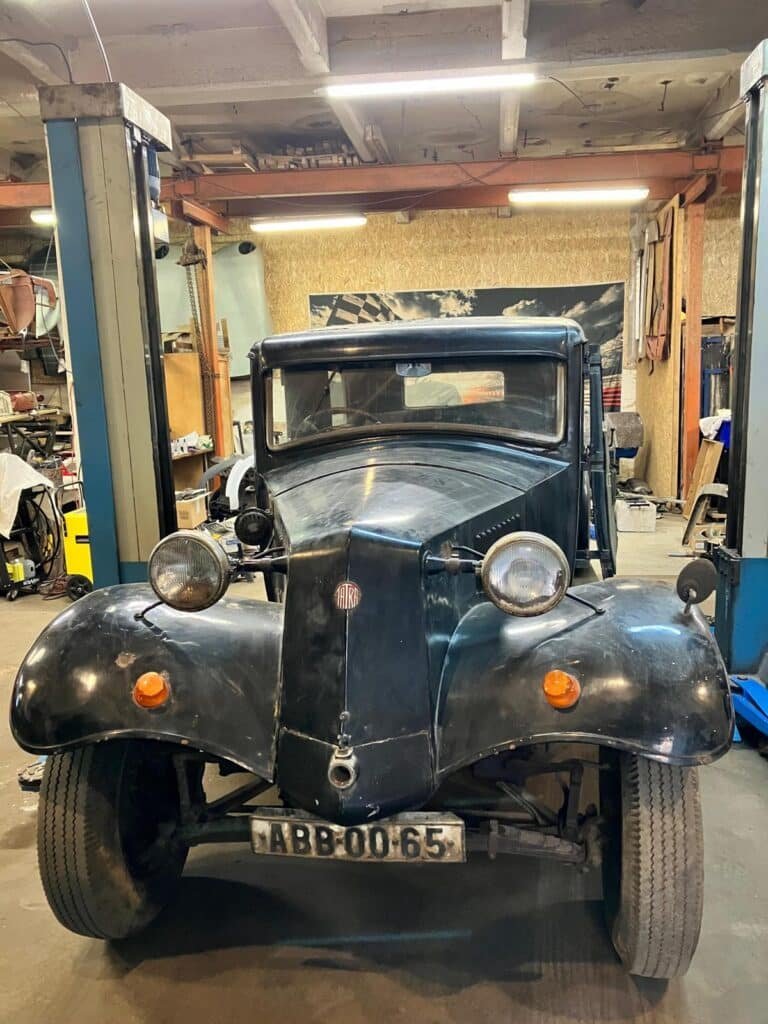

Bodywork on a Ford Thunderbird from the Augsburg area
This Ford Thunderbird from the Augsburg area was delivered to our workshops in the Czech Republic for upcoming bodywork. As agreed, the owner intended to procure the necessary spare parts and repair panels himself. However, this very point stalled the project for three years, as the material deliveries were extremely delayed and ultimately failed to materialize at all. Since further work was impossible and workshop capacity was tied up, we were forced to abandon the project unfinished.
Unfortunately, the condition is typical of what you often see with many older American cars: a lot of wear and tear on the exterior, but underneath it all are old repairs, makeshift solutions, and rust in areas that are often not fully visible before disassembly. Especially with a Thunderbird, a shiny surface can be quite convincing, but it says very little about the car's underlying condition.
This inspection is particularly important for the 1955 Thunderbird. The model was built as a two-seater roadster with a separate frame. If the body, floor areas, and mounting points are problematic on such a vehicle, a seemingly manageable repair can very quickly turn into a complex sheet metal project.


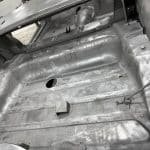


Typical rust spots and old repairs on the early Thunderbird
For early Thunderbirds, buyer's guides, forums, and restoration reports repeatedly mention similar problem areas: frame rust, floor panels, body mounts, rocker panels, floor braces, and the lower corners of the side panels and rear body sections. This combination of issues often makes the first impression misleading. A beautiful car can be in significantly worse condition underneath than expected.
Furthermore, older US repairs were often focused on quick fixes rather than thorough restoration. This doesn't mean that every American classic car is poorly done. It simply means that with imported vehicles, one must carefully distinguish between a good older restoration and a body that has been kept alive somehow over the years.
For our workshops, this means: first expose the damage, then assess it, then decide. With a Thunderbird of this vintage, it's pointless to discuss paint or appearance until the actual structural integrity of the sheet metal, frame, and mounting points is clear. Even with seemingly well-maintained roadsters, the underlying condition ultimately determines the outcome.
Spare parts, repair panels, and real project delays
Parts availability for the 1955-1957 Ford Thunderbird is generally better than one might expect from a European perspective on US cars. There are specialized Thunderbird dealers, manufacturers of repair panels, and larger suppliers with dedicated categories for body, trim, and convertible top parts. This includes, among others, 1955-1957 Thunderbird parts from CASCO, Classic Sheet Metal, and National Parts Depot.
Nevertheless, a generally good parts market doesn't solve every problem. If a project depends on the owner sourcing the parts themselves, even readily available items can significantly delay the process. That's precisely the case here. As long as repair panels and essential spare parts aren't fully available, the actual work on the bodywork inevitably comes to a standstill.
For a US car like the Thunderbird, meticulous parts planning is therefore almost as important as the disassembly itself. Only when it's clear which sheet metal parts are actually needed, what quality was ordered, and what has actually been delivered, can the bodywork be scheduled efficiently and technically soundly.
Things that should be clarified early on before a Thunderbird restoration
An early Ford Thunderbird isn't a complicated car in the modern sense, but it is demanding to assess. Anyone wanting to restore a 1955 T-Bird should have a very thorough inspection done before starting to determine the condition of the frame, floors, sills, and mounting points. This is precisely where a sound project is separated from an expensive surprise package.
The diagnosis for this car remains clear: the bodywork needs a thorough, honest restoration, not just a quick cosmetic fix. Once the missing parts and repair panels are available, the scope of work can be reliably determined. Only then can it be decided which repairs are worthwhile and which areas need to be completely rebuilt.
Anyone wanting to restore a Ford Thunderbird or another American coupe or convertible from that era shouldn't start with chrome, paint, or brochure romanticism. It's essential to look underneath the car, at its structure, and assess the quality of previous repairs. That's precisely where it's determined whether a beautiful American classic will become a viable restoration project or just an expensive stagnation.